How to package SEO services so clients know what they're buying
SEOReseller guide · Publishes · 3 min read
Short answer
Package SEO services around units a client can count, such as placements, locations or audited sites. For each package state what one unit includes, what it excludes, what you need from the client, how turnaround is measured and how results are reported. Build tiers by changing quantity or scope, not by adding vaguer adjectives, and never promise rankings.
Key takeaways
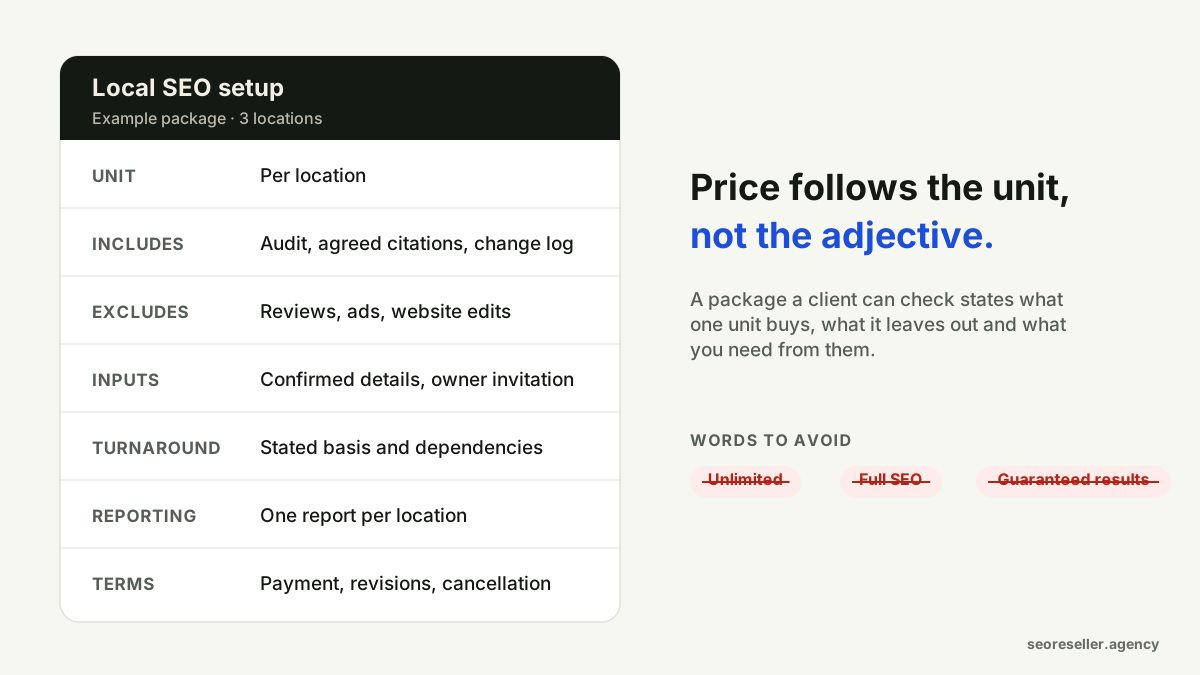
- Price follows the unit, not the adjective.
- Every package needs inclusions, exclusions, client inputs and a reporting format.
- Tier by quantity or scope; avoid "unlimited" and "full SEO".
- Separate deliverables (what you control) from outcomes (what you can't promise).
Why units beat adjectives
"Premium SEO" and "Growth package" tell a client nothing about what they'll receive. Units do. "Eight placements per month on relevant sites, reported with live URLs" can be checked at the end of the month. When clients can check, disputes become conversations about evidence instead of feelings.
| Vague | Checkable |
|---|---|
| Full SEO management | Audit of 1 site + 6 agreed fixes reviewed |
| Unlimited link building | 8 placements per month, report with live URLs |
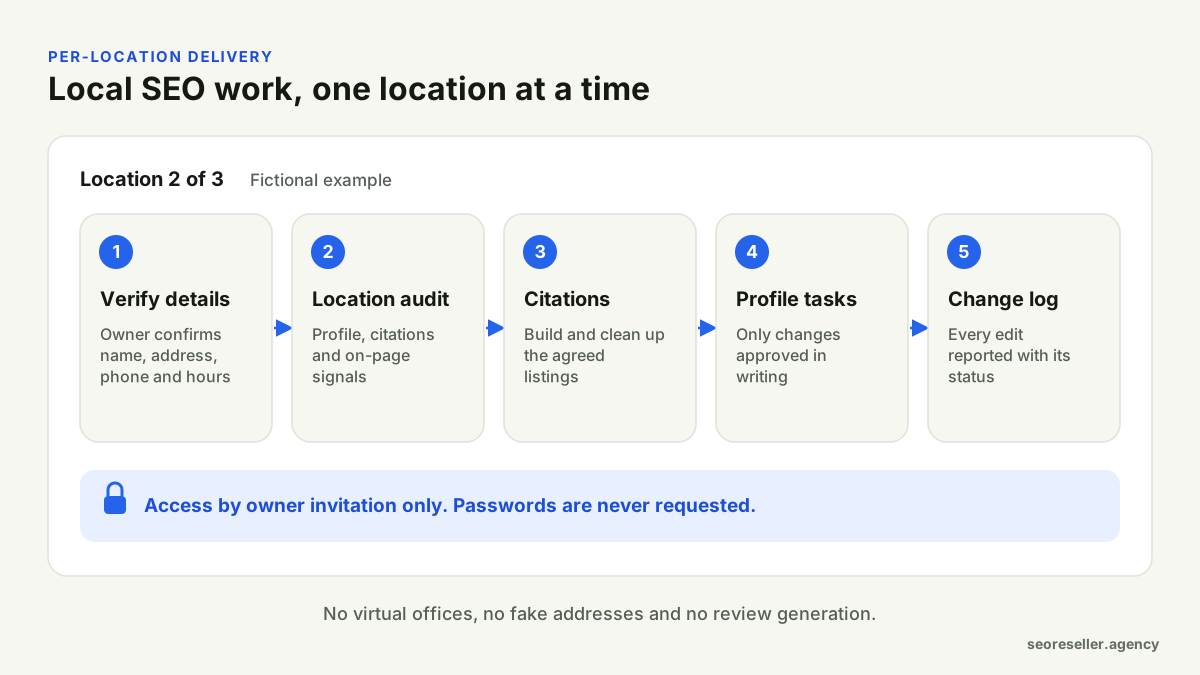
| Local domination | Citations on an agreed list for 3 locations |
| Guaranteed page one | Stated deliverables; outcomes reported, not promised |
The anatomy of a clear package
- Name and purpose: one sentence on what it's for.
- Unit and quantity: what is counted, and how many.
- Includes: the work inside one unit.
- Excludes: the obvious things it doesn't cover.
- Client inputs: information, approvals and access you need, granted by invitation rather than passwords.
- Turnaround basis: how delivery time is measured and what pauses it.
- Reporting: format and frequency.
- Terms: payment, revisions, cancellation.
Building tiers that make sense
Tiers should differ in quantity or scope, not in how enthusiastic the description sounds. A sensible pattern is to keep the unit the same and change how many, or to add a clearly separate component.
| Tier | Local SEO example | Link building example |
|---|---|---|
| Starter | 1 location: audit + citations | 4 placements per month |
| Standard | Up to 3 locations: audit + citations + approved profile tasks | 8 placements per month |
| Extended | Standard + on-site recommendations per location | 12 placements per month + quarterly link review |
Write exclusions on purpose
Exclusions prevent most scope disputes. Name what a reasonable client might assume is included: rankings, website changes, content writing, paid ads, review management, ongoing monitoring after delivery. Writing them down is not negative selling; it's what makes the package trustworthy.
Turning a package into a proposal
- Start with the client's goal in their words.
- Show the package as units with inclusions and exclusions.
- State what you need from them and by when.
- Show a sample of the report they'll receive. A labelled example works if you have no shareable client work yet.
- Separate deliverables from outcomes: "We will deliver X. We'll report on Y. Rankings depend on more than this work."
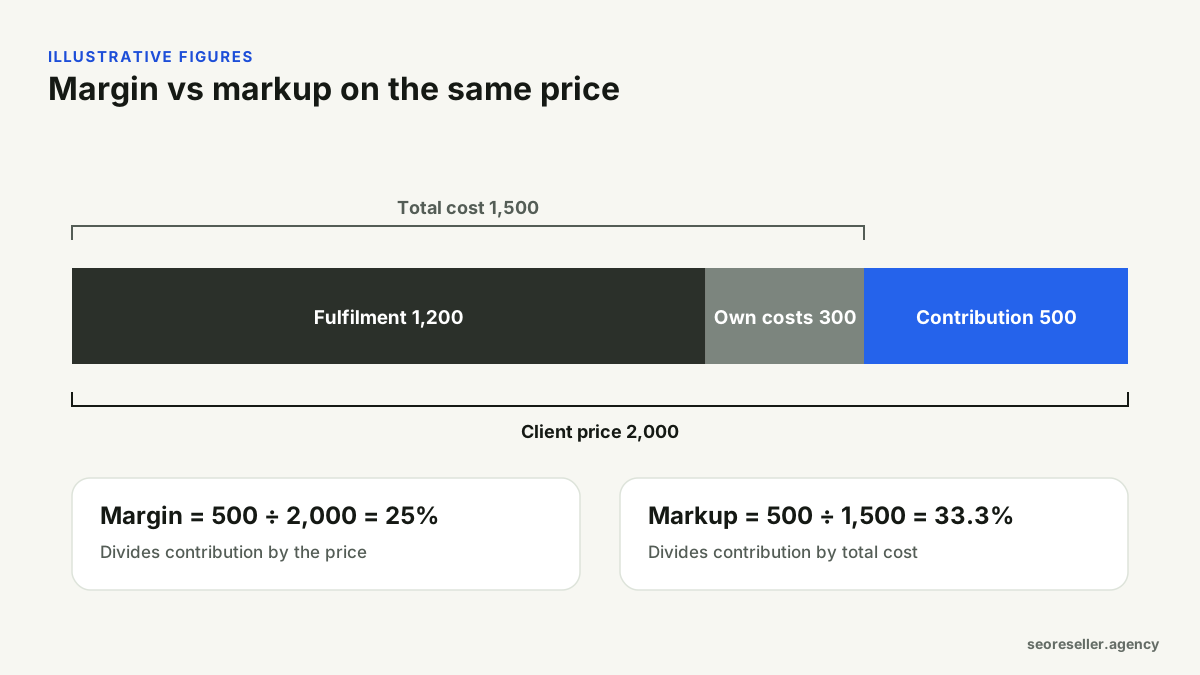
Then price it from total cost: see SEO reseller pricing and the margin calculator.
Package review checklist
- The unit is countable and appears in the report
- Inclusions and exclusions are both written down
- Client inputs and approvals are listed
- Turnaround says what pauses it
- No guarantees of rankings, traffic or revenue
- No "unlimited" or "full SEO" wording
To see how we scope our own services, look at the pricing page and the sample reports.